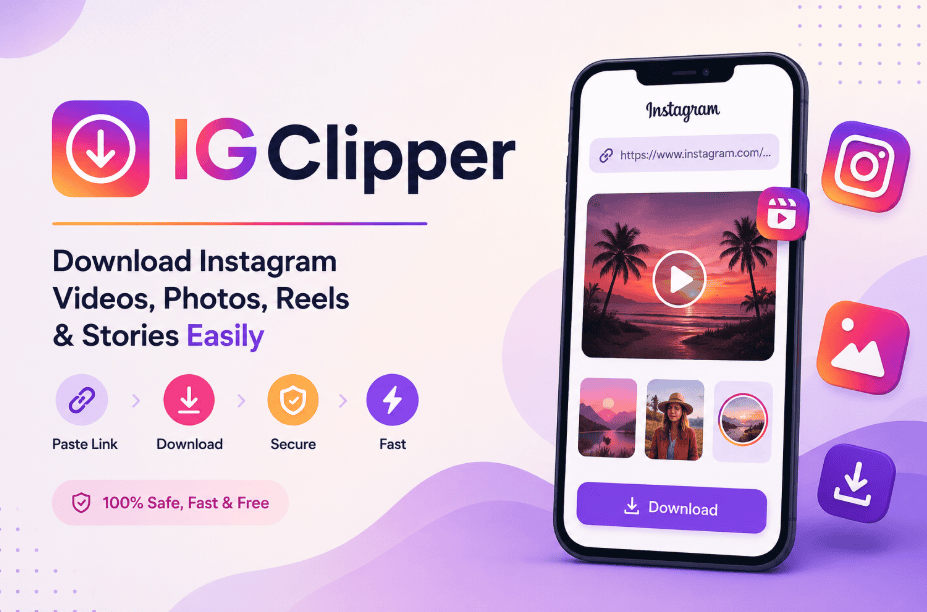
Every Instagram downloader falls into one of two categories: a website you visit and paste a link into, or an app you install on your phone. Both get you the same file in the end, but the trade-offs around safety, storage, and convenience are different enough that the choice matters. This guide breaks down online Instagram downloaders versus app-based ones so you can pick the right tool for how you actually use Instagram.
Jawab Cepat
Online Instagram downloaders work instantly in your browser with nothing to install, making them the safer default for occasional use. App-based downloaders can offer extra features like batch downloads and auto-organizing, but they require checking the app’s source carefully, since sideloaded apps outside official stores carry real malware risk.
Takeaways Kunci
- Online downloaders need no install, no storage space, and no permissions beyond your browser.
- App-based downloaders can offer batch downloading and organization features that are harder to build into a website.
- Sideloaded apps from outside official app stores carry meaningfully more risk than either official apps or browser-based tools.
- Instagram itself doesn’t offer a native download button for most content, both options work around that the same underlying way.
- For occasional, one-off downloads, the extra step of installing an app rarely pays off.
How Online Downloaders Work
An online downloader like IGClipper runs entirely in your browser. You paste the Instagram post, Reel, or Story link, the site fetches the content from Instagram’s servers, and you download the resulting file directly to your device. No account, no install, no app taking up storage space afterward.
Download Instagram content without installing anything:
How App-Based Downloaders Work
An installed app handles the same core task, fetching content from a link, but keeps its own interface, storage location, and sometimes extra features like queuing multiple downloads or automatically sorting saved files into folders by account or date. The trade-off is the install itself, app permissions, storage space, and ongoing updates all become your responsibility to manage.
Online vs App-Based Compared
| Faktor | Online Downloader | App-Based Downloader |
|---|---|---|
| Install Required | Tidak | Yes |
| Storage Space Used | None beyond downloaded files | App size plus downloaded files |
| Safety Verification Needed | Check the website itself | Check app store reviews and permissions, more critical for sideloaded APKs |
| Batch Downloading | Varies by tool | More commonly supported |
| Terbaik Untuk | Occasional, one-off downloads | Frequent, high-volume downloading |
How to Evaluate Either Option Safely
Whichever route you choose, the same safety questions apply. Does the tool ask for your Instagram username and password? It shouldn’t, a legitimate downloader only needs the public link. Does an app request permissions unrelated to downloading files, like contacts or messages? That’s a red flag. For a broader comparison of specific tools, see our roundup of the Perkakas unduh Instagram terbaik.
Kesalahan Umum
- Installing an APK from an unofficial website instead of an app store, skipping whatever review process exists.
- Granting an app broad permissions it doesn’t need just to download a video file.
- Assuming an online tool is less capable by default, many handle carousels, Stories, and Reels just as completely as an app.
- Keeping an installed app around long after you’ve stopped using it regularly, an unused app is still a standing permission grant on your device.
Tips Ahli
If you only download from Instagram occasionally, there’s rarely a good reason to install anything at all. Reserve an app-based tool for genuinely frequent, high-volume use where the batch and organization features actually save you time, and even then, stick to official app stores rather than sideloaded files from unfamiliar websites.
Pertanyaan Yang Sering Muncul
Kesimpulan
Neither option is universally better, it comes down to how often you download and how much you trust the specific tool in front of you. An online downloader is the lower-friction, lower-risk default for most people, while an app makes sense only when frequent, high-volume use justifies the install and the extra vetting it requires.

